
Ask ten people what an ophthalmologist does, and most will say "eye doctor" and leave it there. Ask them what an oculoplastic surgeon does, and you'll probably get a blank stare. Which is odd, honestly, because this is one of the more common - and more misunderstood - corners of eye care.
Here's the short version: your eyeball has its own doctor. But everything around it - the eyelid, the tear duct, the socket it sits in - has a different specialist entirely. That's oculoplasty.
If you've landed here because your eyelid has started drooping, or your eye waters for no reason at all, or you noticed a stubborn little bump that won't go away - this should clear things up.
What is Oculoplasty, Actually?
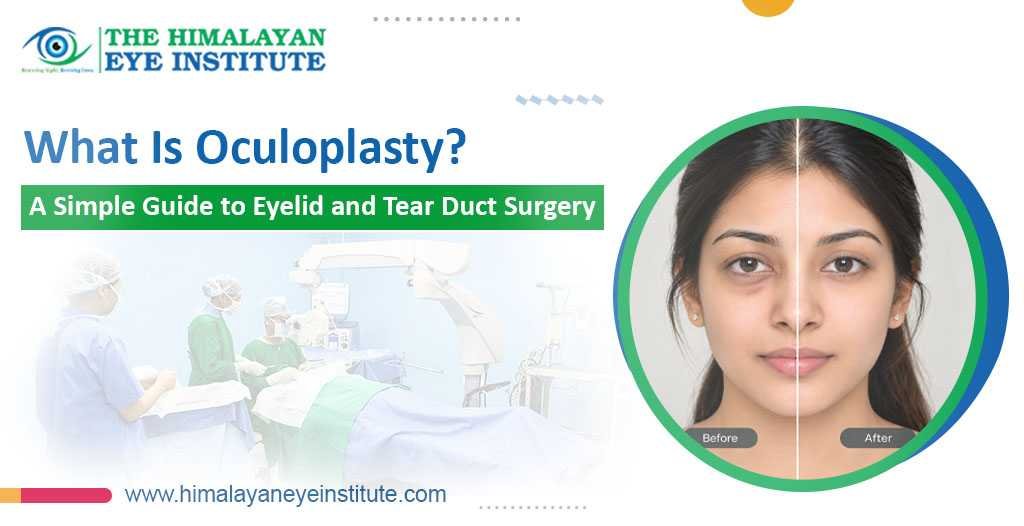
Oculoplasty is the branch of ophthalmology that deals with everything surrounding the eye rather than the eye itself - eyelids, tear ducts, eyebrows, and the bony socket (the orbit) that the eyeball sits in. Surgeons who practice it are trained in both ophthalmology and reconstructive surgery, which is a slightly unusual combination and part of why the field can handle such a wide range of problems, from a lazy eyelid muscle to a fractured eye socket after an accident.
A patient once described it to a doctor as "the difference between fixing the TV and fixing the frame it sits in." Not medically precise, but not far off either.
The Problems it Actually Treats
This is longer than most people expect.
Droopy eyelids. Medically it's called ptosis, and it happens when the muscle that lifts the eyelid weakens - from age, from an old injury, sometimes from birth. In mild cases it's just cosmetic. In more advanced cases, the lid genuinely blocks part of your vision, and people don't always realize how much until it's fixed and the world looks noticeably brighter.
Puffy or heavy eyelids. Skin loses elasticity as we get older, and eyelids are often the first place it shows - hooded upper lids, baggy lower ones. Sometimes it's purely appearance. Sometimes the sagging skin is heavy enough to interfere with peripheral vision, especially while driving or reading.
Watery eyes that won't stop. This one surprises people the most. If your eye is constantly tearing up - not from emotion, not from wind, just randomly, all day - it's usually a blocked tear duct, a condition called epiphora. Tears are supposed to drain through a small canal into the nose. When that canal gets blocked, they have nowhere to go but down your cheek. The standard fix is a procedure called DCR, which basically builds a new drainage route.
Lumps and bumps on the eyelid. A stye that never quite resolves, a cyst, a chalazion - these are common, usually harmless, and usually solved with a short outpatient procedure.
Eyelids that turn the wrong way. Occasionally a lid rolls inward and the lashes start scraping the eyeball with every blink (entropion), or it rolls outward and leaves the eye exposed and dry (ectropion). Both are more uncomfortable than they sound, and both are fixed surgically.
Injuries near the eye. A fall, a car accident, a cricket ball to the face - the bones around the eye are thin and can fracture. Oculoplastic surgeons handle the reconstruction so the eye stays protected and sits where it should.
Growths that need removing. Both benign and cancerous growths on the eyelid fall under this specialty too, usually followed by careful reconstruction so the eyelid still functions and looks natural afterward.
How Do You Know If This is Your Problem?
You don't need to diagnose yourself - that's what the consultation is for - but a few things tend to send people in the door:
- The eyelid feels heavy by the end of the day, or you catch yourself tilting your head back just to see properly
- One eye (or both) keeps watering, even indoors, even on an ordinary Tuesday
- There's a lump on the lid that's been sitting there for weeks and isn't shrinking
- Your lashes feel like they're poking your eye
- You've had a recent injury near the eye and something looks or feels off since
- You keep getting told you "look tired" even when you're not, because of puffiness or sagging skin
If two or three of those sound familiar, it's worth an actual consultation rather than waiting to see if it resolves on its own - some of these, like blocked tear ducts, tend to get more stubborn with time, not less.
Cosmetic or Medical? Usually it's Not One or The Other
People often assume oculoplasty is basically eyelid cosmetic surgery with a fancier name. Some of it is - removing under-eye bags purely for how they look is a real, common request. But the majority of what oculoplastic surgeons do day to day is medical: correcting a droopy lid blocking someone's vision, fixing a tear duct, repairing an eyelid after trauma. A good surgeon will tell you plainly which category your case falls into, rather than pushing you toward whichever is more profitable - and if a doctor doesn't do that, that's worth noticing.
What the surgery day actually looks like
Nothing about this is as dramatic as it sounds.
Most oculoplasty procedures are done under local anesthesia - you're awake, the area is numbed, and you generally don't feel much beyond some pressure. Sedation is used for a few procedures, but full general anesthesia is uncommon. Almost everything is done as day surgery, meaning you go home the same day, not admitted overnight.
The surgery itself is usually quick - often under an hour, sometimes closer to twenty minutes for smaller procedures. Because incisions are placed along the eyelid's natural crease or hidden inside the lid, scarring afterward is minimal to the point of being nearly invisible once healed.
Recovery is the part people worry about most and end up finding easier than expected. Some swelling and bruising in the first few days is completely normal - cold compresses help a lot here. Most people are back to light daily activity within a week. Full healing, especially for more involved reconstruction, can take a few weeks longer, but the visible "recovering from surgery" look tends to fade fast.
A few things that actually make recovery smoother:
- Cold compresses for the first day or two, not longer than advised
- Sleep with your head slightly elevated for the first few nights
- Resist the urge to rub your eyes - genuinely, this one matters more than anything else on this list
- Use the eye drops or ointment exactly as prescribed, not "when you remember"
- Wear sunglasses outdoors while the skin is healing
- Show up to your follow-up appointments even when everything feels fine
Why the Hospital You Choose Matters
Because you're working with such fine anatomy - eyelid muscles are millimeters thick - the surgeon's experience and the hospital's equipment genuinely affect outcomes. This isn't a field where "good enough" facilities cut it.
The Himalayan Eye Institute is the largest private eye care provider in North Bengal and holds NABH Entry Level certification, which reflects a certain baseline of clinical and safety standards that not every clinic in the region meets. As a full-service eye hospital in North Bengal, oculoplasty sits alongside cataract, glaucoma, and retina care under one roof - which in practice means your diagnosis, surgery, and follow-up don't get scattered across three different places.
If you're looking into Oculoplasty Surgery in Siliguri, or just trying to find an ophthalmologist in Siliguri who won't rush you through a five-minute consultation, that continuity of care tends to matter more than people expect going in.
Questions people usually ask
Does it hurt?
Not during the procedure - local anesthesia handles that. Afterward, expect mild soreness for a day or two, manageable with the medication prescribed. Nothing close to unbearable.
Will I have a visible scar?
Unlikely to be noticeable. Incisions are hidden in the eyelid crease or inside the lid itself, so most patients say people can't tell they've had surgery at all once healing is done.
How long until I look and feel normal?
Swelling mostly settles in one to two weeks. Full internal healing can take a bit longer, but you're usually presentable and comfortable well before that.
Is surgery the only fix for a blocked tear duct?
Not always - mild cases sometimes respond to massage techniques or minor in-clinic procedures. But if it's been persistent for a while in an adult, DCR surgery tends to be the more lasting solution.
Can this actually improve my vision?
Yes, in the cases where a droopy or heavy eyelid was physically blocking part of your visual field. It's one of the more satisfying outcomes in this line of surgery - patients often notice the difference immediately.
Does age matter?
Not really. Some conditions, like congenital ptosis or blocked tear ducts, show up in babies. Others, like sagging eyelid skin, show up decades later. There's no wrong age to get it looked at.
Conclusion
If any of this sounds like what you've been dealing with - the watery eye, the heavy lid, the lump that's overstayed its welcome - it's a fairly straightforward thing to get checked, and usually a more straightforward fix than people assume going in.
The team at The Himalayan Eye Institute in Siliguri can take a look and tell you plainly what's going on. You can book online or call +91 74077 40723 / +91 89007 99992.